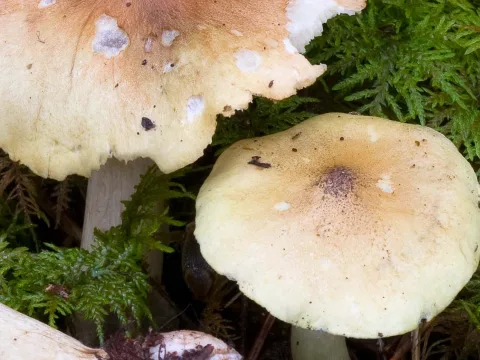
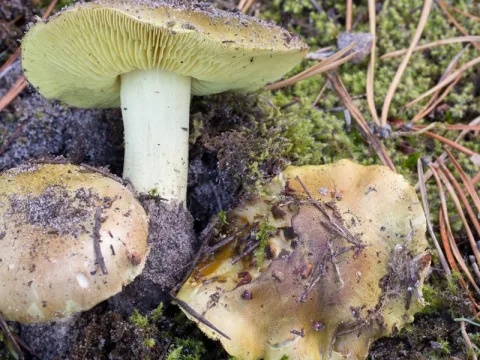
Acrid Knight
Tricholoma aestuans

Fungi can be grouped in different ways. In biology, taxonomic groups such as families and genera are used to describe evolutionary relationships, whereas for mushroom foragers it is often more practical to focus on appearance and other visible characters. On Svampguiden, species are therefore arranged in practical morphological groups, where fungi with a similar overall appearance are placed together, even though these groups do not always reflect their closest taxonomic relationships.
Agarics with emarginate gills and white to brownish-pink spore print. Often large and fleshy, with a stem that is not hollow. Some are decomposers in soil and litter, others are mycorrhizal with trees. About 160 species in around 10 different genera.
Tricholoma aestuans

Tricholoma lascivum s.lat
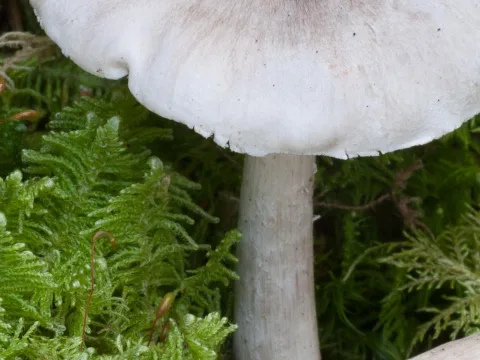
Tricholoma virgatum
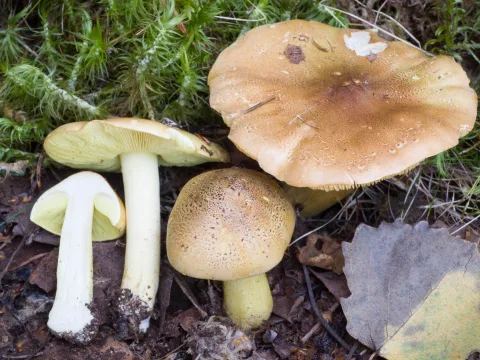
Tricholoma frondosae

Tricholoma sciodes

Tricholoma fulvum
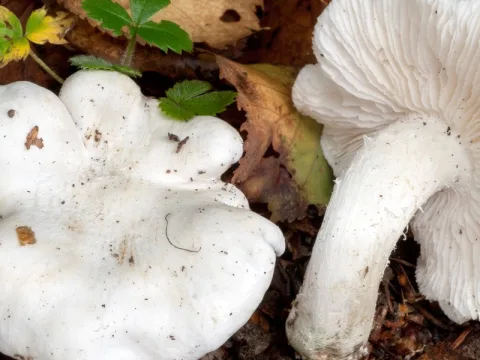
Tricholoma columbetta

Tricholoma focale
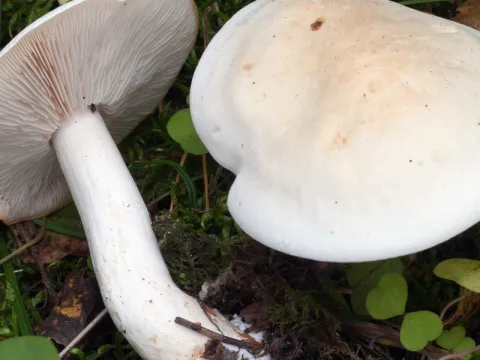
Tricholoma stiparophyllum
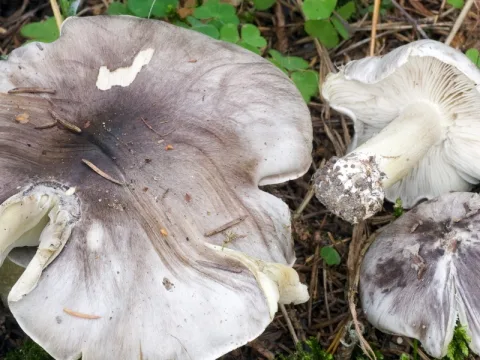
Tricholoma portentosum

Tricholoma sejunctum s. str.
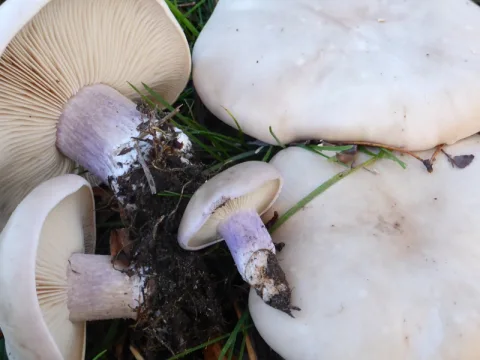
Lepista saeva
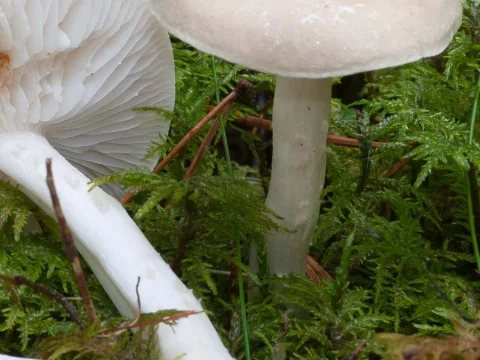
Tricholoma inamoenum

Tricholoma guldeniae

Tricholoma bresadolanum
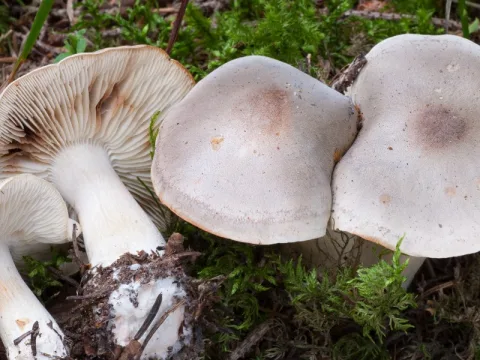
Tricholoma saponaceum
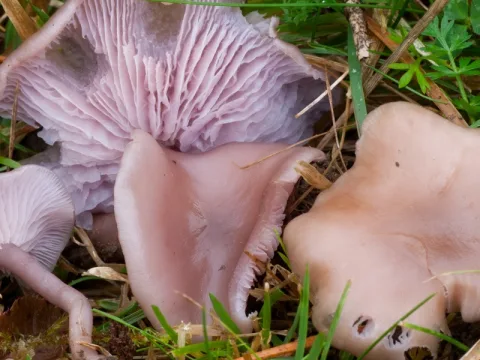
Lepista sordida
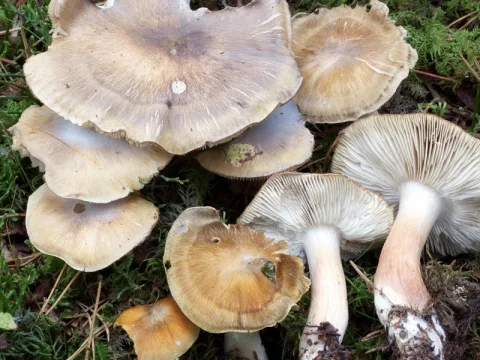
Tricholoma arvernense

Tricholoma matsutake

Calocybe gambosa

Tricholoma sulphureum/bryogenum
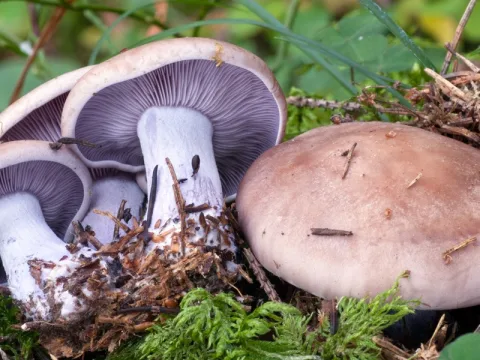
Lepista nuda
Tricholoma equestre