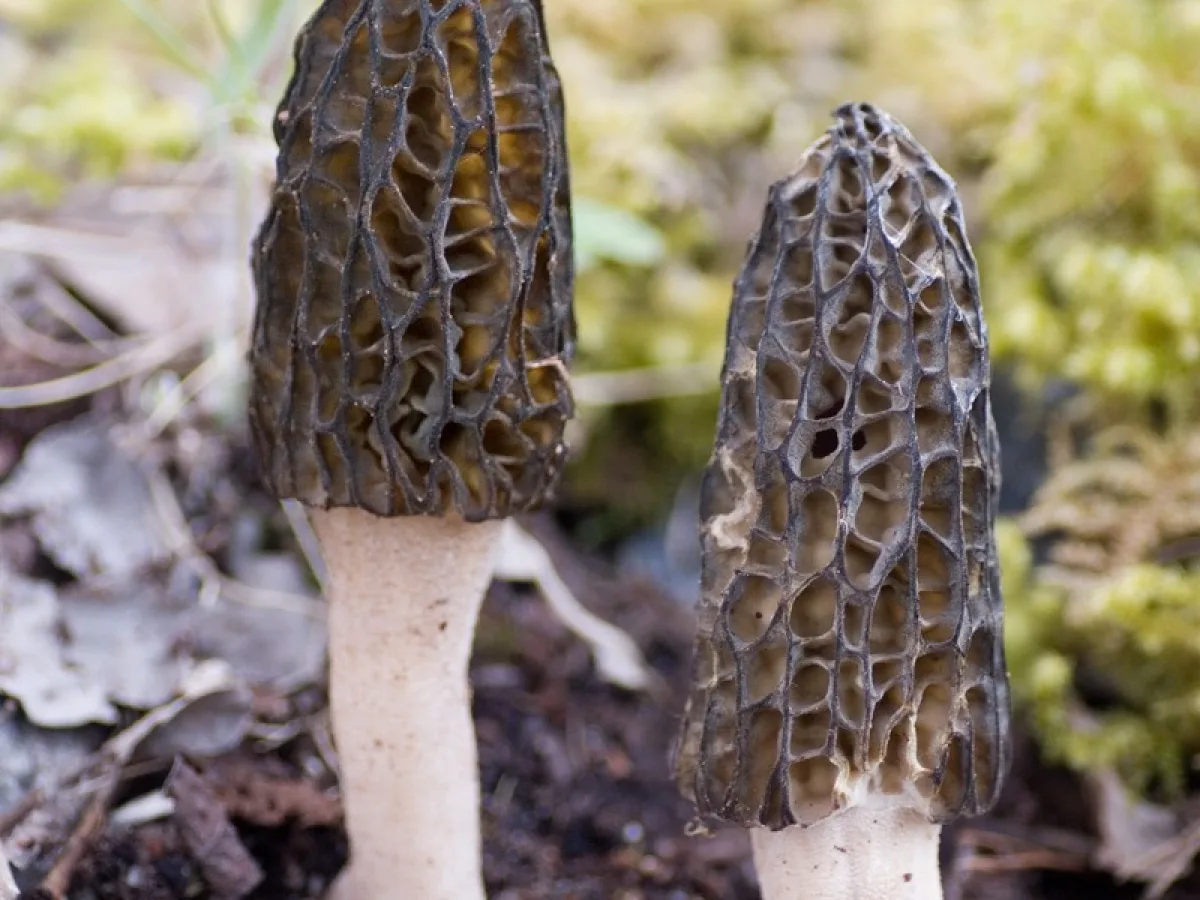
- Cap pointed, elongated in height, brown.
- Outer surface of cap with oval pits and longitudinal ridges.
- Cap and stem hollow.
- Stem white, granular.
Morels
Black Morel
Morchella conica
LC
Least concern
Edible
5 images
Characteristics
Ecology
Morchella conica grows from late spring to early summer in deciduous forest, coniferous forest, meadows and pastures, ditch edges and gardens.
Notes
All black morels are considered edible, but a few milder poisoning cases are known. In many of the cases, large quantities were eaten, and they may also have been insufficiently heated or cooked for too short a time. Black morels should always be cooked with heating for at least 15 minutes, and you should never eat large quantities.
Similar species
There are several different species of black morels in the Nordic region, and they are difficult to distinguish. Here they are all treated under the description of M. conica in the broad sense (s.lat.), which includes M. elata, M. eximioides and M. exuberans, among others.
Morchella esculenta has a rounder and paler cap without longitudinal ridges, good edible mushroom.
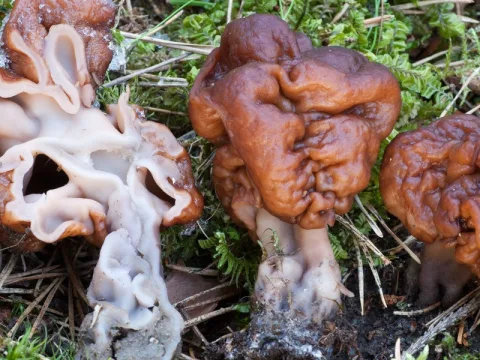
Gyromitra esculenta lacks pits and cavities in the cap, poisonous.
Morchella esculenta has a rounder and paler cap without longitudinal ridges, good edible mushroom.
Gyromitra esculenta lacks pits and cavities in the cap, poisonous.